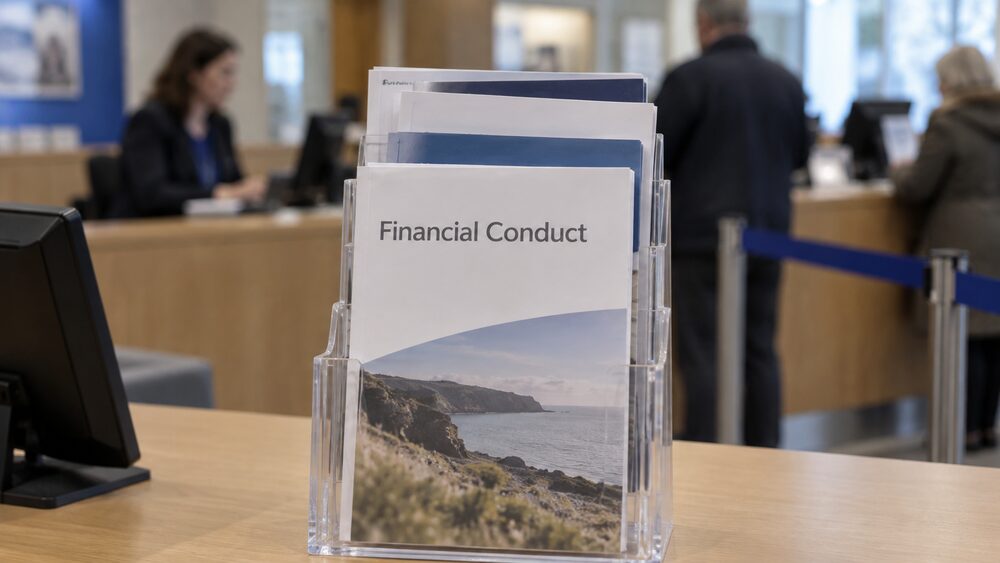
The Financial Conduct Authority (FCA) regulates financial services in the UK1. It is the country's financial services conduct regulator2: its job is to make sure the firms you deal with behave properly, and to act when they do not. It supervises banks, lenders, insurers, investment firms, pension providers and payments companies, and it writes the rulebook those firms must follow when they sell to you, advise you or handle your money.
The FCA is not the whole of financial regulation. The Bank of England, through the Prudential Regulation Authority, separately supervises the safety and soundness of banks and insurers, while the FCA focuses on how firms treat their customers3. The FCA is also not a complaints body or a compensation body: it does not take up individual complaints, and it cannot pay you compensation if a firm treated you badly. Those jobs belong to the Financial Ombudsman Service and, when a firm fails, the Financial Services Compensation Scheme.
The UK's financial services conduct regulator
The FCA regulates financial services firms in the UK, including firms that provide financial advice on pensions and Self Invested Personal Pensions (SIPPs)9. Its role as the conduct regulator2 means it is concerned with how firms behave towards their customers: how products are sold and advertised, how complaints are handled, how customers in difficulty are treated, and whether firms are honest about what they are offering. One of its responsibilities is ensuring fair practice in consumer credit3.
The split of duties matters to consumers because it determines who to approach about a problem. A concern about how a firm treated you goes to the FCA's rules and, ultimately, the Financial Ombudsman; a concern about whether a bank or insurer is financially safe is a prudential matter for the Bank of England and the Prudential Regulation Authority3. The FCA also publishes contact details for regulated financial businesses, so its register is a practical starting point when you need to reach a firm10.
The FCA's reach extends into areas you might not expect. Following a political scandal about bank account closures, the FCA reviewed how banks close accounts; banks do have to close accounts when they cannot carry out the "know your customer" checks required by money laundering regulations, or when they are concerned an account may be used for financial crime11. The FCA also periodically reviews whole markets rather than single firms: its high-cost credit review covered overdrafts, store cards and catalogue credit, home-collected loans and rent-to-own services, and after firms repriced overdrafts the FCA wrote to the banks to seek clarification about how they determined the new interest rate12.
Parliament sets the FCA's overarching objectives as the consumer and conduct regulator13, but within that framework the FCA, not Parliament, is responsible for setting the rules governing the sector, as far as is practical14. In practice that means new consumer protections usually arrive as FCA rules rather than Acts of Parliament, and the FCA has said that some of the protections in the Consumer Credit Act, which the government plans to repeal, are significant and that it would not be able to sufficiently replicate them all14.
Which firms and products the FCA regulates
Firms must be authorised by the FCA to provide a wide range of products and services to consumers4. The list is broad:
- Bank accounts, both current and savings accounts
- Lending money, including credit cards, Buy Now Pay Later, hire, credit broking and debt advice
- Debt-related services, including debt advice and debt collection
- Crowdfunding platforms
- Claims management services
- Insurance, life or general
- Funeral plans
- Investments, including shares, funds and derivatives
- Pensions, both workplace and personal
- Home finance: residential mortgages, equity release and home purchase plans, including Sharia-compliant mortgages
- Payments and e-money services, such as online wallets and money transfers4
Within pensions the division of labour is worth knowing. The FCA regulates personal pensions, both individual personal pensions and workplace personal pensions, which are predominantly defined contribution schemes15, and it regulates contract-based pensions, which involve a contract between an individual and the pension provider16. Occupational pension schemes that are trust-based are supervised by The Pensions Regulator instead, so where you take a pension complaint depends on which kind of scheme you are in9.
Buy Now Pay Later is now within the FCA's perimeter too, and the FCA gives consumers a concrete way to check a lender: search the firm by name, select "Borrowing money, including credit card lending and credit information", and check the firm is "Authorised" with permission to "Lend you money on an unsecured basis"17. The same principle applies across every product in the list above: if a firm is not authorised for the activity it is carrying out for you, the protections that come with FCA regulation may not apply. The page on regulated and unregulated products explains the boundary in more detail.
The rules firms must follow when dealing with you
Authorised firms must follow certain rules and standards when dealing with you1. These rules are what turn the FCA from a name on a poster into something you can actually rely on in a dispute. When you complain, the Financial Ombudsman follows rules set by the FCA18, specifically the FCA's dispute resolution rules (DISP), and takes into account how the business has tried to put things right19. In other words, the yardstick used to judge your complaint is the FCA's rulebook.
There are rules that financial businesses must follow when they investigate a complaint: they should consider what has happened quickly and fairly, and keep you updated throughout the process10. The FCA also expects firms to treat customers in vulnerable circumstances appropriately. It defines a vulnerable customer as:
The FCA, which regulates many firms that provide credit, instructs companies to uphold key conduct principles: to conduct business with integrity, observe proper standards of market conduct, pay due regard to customers' interests and treat them fairly, communicate information clearly, fairly and not misleadingly, manage conflicts of interest fairly, and take reasonable care to ensure the suitability of advice and discretionary decisions11. Authorised firms must follow certain rules and standards when dealing with you1, and when a complaint is investigated, financial businesses should consider what has happened quickly and fairly and keep you updated throughout the process14.
Financial Ombudsman Service guidance on supporting customers in vulnerable situations20
The relationship between FCA rules and ombudsman decisions is being tightened. Under reforms consulted on in 2026, where the conduct complained of is in scope of FCA rules, compliance with those rules, in accordance with the FCA's intent for them, will mean the Financial Ombudsman is required to find the firm acted fairly and reasonably21. The government's response confirmed the approach: for any element of a complaint where a firm has met its obligations under relevant FCA rules, the ombudsman will be required to find the firm acted fairly and reasonably in relation to that element13. For consumers this cuts both ways: a firm that followed the rules has a stronger defence, and a firm that broke them has a weaker one.
Checking a firm is authorised with the Firm Checker
The FCA has launched a tool, the Firm Checker, to help consumers check whether financial services firms are authorised and have permission to sell products and services7. The Financial Ombudsman Service directs people to it as well: use the FCA's Firm Checker to confirm the firm is authorised and help avoid scams before considering an investment, pension opportunity, loan or other financial service22.
Checking properly involves more than matching a name. The FSCS sets out the steps in order: first check your provider is authorised by the FCA, then find out whether the particular activity the authorised firm is carrying out for you is regulated by the Prudential Regulation Authority or the FCA24. The FSCS protection checker is based on the FCA's Financial Services Register, which you can search yourself to check if your firm is authorised25, and you can check whether a provider or adviser is authorised by the PRA or FCA on the FCA register26. For insurance, you can search the FCA register for the provider; if the status shows "authorised", the FSCS may compensate you if the firm fails27.
If the firm you want to complain about is not on the FCA register, the complaint may belong elsewhere: the Financial Ombudsman says complaints about firms not on the FCA register should be referred to the Pensions Ombudsman where pensions are concerned28.
The FCA does not take up individual complaints
A point that catches many people out: the FCA does not investigate individual complaints. If you are unhappy with the conduct of a firm, you can complain to the FCA, but it cannot pay compensation or order the firm to compensate you, even if you have received poor service5. Its role in a complaint is as the rule-setter and, where warranted, the enforcer against the firm, not as your representative.
Other bodies draw the same line about their own limits. The Information Commissioner's Office, for instance, states plainly about nuisance calls and texts: "We don't respond to complaints individually"29. The pattern across regulators is that systemic action comes from the regulator, and individual redress comes from the firm, the ombudsman or a compensation scheme.
The FCA can, however, intervene in how complaints are handled when a problem affects many consumers at once. The government will amend FSMA so that, where the FCA judges that immediate pausing of complaint handling is in the interests of affected consumers and firms, it can pause the handling of relevant complaints which have reached the Financial Ombudsman, without the usual obligation to consult first21. The same reforms allow the FCA to direct firms and the ombudsman to pause complaints that are potentially part of a mass redress event13. This is not theoretical: while the FCA conducted its review of the car finance market, it introduced temporary complaint-handling rules for certain car finance complaints where discretionary commission arrangements were in place30. The ombudsman continues to deal with complaints under the FCA's DISP rules31, so FCA rule changes of this kind directly affect the deadlines that apply to your complaint.
Complaining about a firm: eight weeks, then the Financial Ombudsman
The route for an individual complaint starts with the firm, not the regulator. Before bringing a complaint to the Financial Ombudsman, the process is to complain to the company involved first; if it does not send a final response letter within eight weeks, or you are unhappy with the response, you can bring the complaint to the ombudsman using its complaint form10. The eight-week limit applies across the ombudsman's jurisdiction, including investments32, Buy Now Pay Later33, savings and endowments34, goods and services bought on credit35, unregulated collective investment schemes36, pensions organised by employers37 and home insurance issues such as subsidence38. For insurance specifically, an FCA-regulated insurer must make a final decision on the matter within eight weeks39.
Payment services and e-money work to a tighter timetable. For complaints about being tricked into making a payment, the firm must get back to you within 15 days, either with a response or an explanation of why it cannot yet give one, and must send a final response within 35 days, after which you can bring the complaint to the ombudsman40.
The ombudsman can help only where the business complained about is regulated by the FCA. It can help with an investment as long as the business you are complaining about is regulated by the FCA32, and it may be able to help if your complaint is about a financial adviser or pensions provider that is regulated by the FCA37. Where a pension complaint falls outside that jurisdiction, the Pensions Ombudsman can help if your complaint is about a financial business that is regulated by the FCA, and its own guidance sets out where to go for help with a pension complaint41.
What the ombudsman can look at, always subject to the firm being FCA-regulated:
| Type of complaint | Examples of what is covered |
|---|---|
| Banking and payments22 | Current accounts, savings, cards, online wallets and money transfers |
| Insurance42 | Life and general insurance, including home insurance |
| Investments32 | Shares, funds, advice, savings and endowments |
| Pensions and annuities28 | Personal pensions, pension advice, pensions organised by employers |
| Credit and borrowing33 | Buy Now Pay Later, goods and services bought on credit |
| Fraud and scams23 | Being tricked into making a payment, scam claims |
The comparison page on FSCS or the Financial Ombudsman explains which body to approach when a firm is still trading and when it has failed, and ombudsman or court compares the free ombudsman route with legal action.
How the FCA acts against firms and scams
The FCA's enforcement toolkit goes well beyond writing rules. It is a designated public enforcer under Part 3 of the Digital Markets, Competition and Consumers Act, allowing it to seek court orders which may include redress for breaches of consumer protection legislation, including the Consumer Rights Act43. It can use its powers under section 404 of FSMA to make rules requiring authorised persons, electronic money issuers and payment service providers to establish and operate consumer redress schemes, and it can impose a requirement on an individual firm to set up a scheme of that kind43. Where an unfair contract term also amounts to a rule breach causing loss to consumers, the FCA can apply to court for restitution or require restitution; but it does not have the power to grant redress to consumers simply because a term or notice is unfair43.
On scams, the FCA runs ScamSmart, and it advises anyone considering an investment opportunity to check the Warning List of firms, which is updated daily44. If you want to check whether a firm is legitimate or report a possible scam, the FCA is the go-to contact3. The practical habit the FCA and the ombudsman both push is the same one described above: check the firm on Firm Checker, and check the contact details match, before you hand over money23.
The FCA also supervises the safety of money held by payments firms between the moment you pay it and the moment it reaches its destination. Its Supplementary Regime rules, published in 2025 with a 9-month implementation period, require payments firms to safeguard relevant funds, complete a safeguarding return monthly, and safeguard unclaimed relevant funds for at least 6 years; firms that did not safeguard over £100,000 of relevant funds at any point in the previous 53 weeks are exempt from arranging a safeguarding audit45. The FCA estimated total audit costs to payments firms of £53.3m, up from a previous estimate of £49m45. For consumers, the point is simpler: money in an FCA-authorised e-money or payments firm is not left loose in the firm's own accounts.
Help if you are struggling with debt or repayments
Debt advice itself is a regulated activity. Under the debt respite scheme regulations, a debt advice provider is an authorised person with a Part 4A permission relating to debt adjusting (article 39D) and debt-counselling (article 39E), or a local authority carrying on those regulated activities46. That means the person giving you debt advice may need FCA authorisation, and firms in this space are covered by the FCA's consumer credit rules. The page on how debt advice firms are regulated covers this in detail.
Mortgage borrowers in difficulty have a specific protection. The FCA regulates most mortgages taken out on or after 31 October 20046, which brings those mortgages inside the FCA's mortgage conduct of business rules on how a lender must treat a borrower in arrears. Mortgages taken out before that date sit under a different regime, covered on pre-2004 mortgages.
If you are struggling, the sequence that the rules support is:
- Contact the firm you owe money to and explain the difficulty; its treatment of you is governed by FCA rules.
- Get free debt advice from a provider that is authorised for debt counselling46.
- If the firm's response is poor, complain to it formally and then to the Financial Ombudsman10.
- If the firm has failed, check whether the FSCS can help24.
Free, impartial help is available: the debt guide sets out where to get it, and MoneyHelper is the government-backed starting point for money guidance.
Protecting access to cash and bank branches
The Financial Services and Markets Act 2023 gave the FCA powers to protect access to cash, though not wider banking services11. It gave the FCA powers to oversee and ensure the continued provision of cash deposit and withdrawal facilities to individuals and businesses47. The limit matters: the FCA can require that you can still get notes and coins, but it cannot force a bank to keep a branch open for all the other things branches do.
Under the FCA's rules, banks and building societies must protect access to cash8. In practice the rules work like this:
- Banks and building societies must review how easy it is for you to get cash in your local area, including paying in and taking out cash, notes and coins, and fill significant gaps8.
- Reviews are triggered by changes to services, for example if a branch, cash machine or Post Office closes or changes its opening hours, and by cash access requests from local residents, businesses and representatives8.
- Firms planning to close facilities affecting cash access must keep them open until the necessary cash services are available8.
- The government has chosen 14 banks and building societies and 1 coordination body to deliver these reviews8.
- Replacement services could include ATMs, banking hubs or adapting Post Office branches8.
*A banking hub: several banks share one high street premises, with a counter service and cash machines, often installed after a branch closure review.
If your local branch or cash machine is closing, you or a local representative can trigger a review, and the narrow page on cash access requests explains how. The full rules are covered on the access to cash rules page.
Contacting the FCA
The FCA publishes contact details for regulated financial businesses, so its register is a way to find a firm's real details rather than a number a scammer gave you10. For consumers, the FCA's most useful services are the Firm Checker7, the Warning List of firms, updated daily44, and the ability to report a possible scam or the conduct of a firm such as a claims management company5.
Be clear about what a message to the FCA will achieve. It will not get your complaint investigated or your money back: the FCA cannot pay compensation or order a firm to compensate you5. What it can do is feed into the FCA's supervision and enforcement work, and in cases affecting many consumers, that work can lead to industry-wide redress under the powers described above43. For your own case, the sequence is the firm first, then the Financial Ombudsman10, and if the firm has failed, the FSCS, which may compensate if the firm was authorised; for defined benefit pension transfer advice, for example, the adviser must have gone out of business and must have been regulated by the FCA at the time it gave the advice48.
If you have a complaint about the FCA itself, that is handled separately, and the page on complaining about the FCA explains the route. For the wider picture of which body does what, see who regulates what.
Sources48 cited
- Getting information and help with pensions nidirect, 2026-06-26
- The Financial Conduct Authority: role and objectives House of Commons Library, 2026-09-26
- What is the Prudential Regulation Authority (PRA)? Bank of England, 2026-02-11
- How to check a firm or individual is authorised Financial Conduct Authority, 2023-03-20
- Complain about a claims management company GOV.UK, 2026-09-26
- Mortgage arrears or payment difficulties nidirect, 2025-11-07
- Check if a firm is authorised: Firm Checker Financial Conduct Authority, 2026-09-27
- Access to cash: rules for banks and building societies Financial Conduct Authority, 2024-09-18
- Report concerns about your workplace pension The Pensions Regulator, 2026-09-26
- How to complain Financial Ombudsman Service, 2026-09-25
- Access to banking services and cash House of Commons Library, 2026-09-26
- The FCA high-cost credit review House of Commons Library, 2026-07-08
- Review of the Financial Ombudsman Service: consultation response GOV.UK, 2026-05-20
- Consumer Credit Act reform and the FCA House of Commons Library, 2026-09-26
- Written evidence on pension regulation UK Parliament committees, 2018-09
- Pension value to be put under the spotlight The Pensions Regulator, 2026-01-08
- Buy Now Pay Later: checking a lender Financial Conduct Authority, 2026-02-11
- Who we can help Financial Ombudsman Service, 2026-09-26
- Electronic money services complaints Financial Ombudsman Service, 2026-09-27
- Supporting customers in vulnerable situations Financial Ombudsman Service, 2026-09-26
- Review of the Financial Ombudsman Service: consultation GOV.UK, 2026-05-20
- Banking and payments complaints Financial Ombudsman Service, 2026-09-25
- Fraud and scams complaints Financial Ombudsman Service, 2026-09-27
- Guide to investment protection Financial Services Compensation Scheme, 2026-09-25
- Can't find your firm? Financial Services Compensation Scheme, 2026-09-25
- Protect your money Financial Services Compensation Scheme, 2026-09-25
- Flood insurance protection Financial Services Compensation Scheme, 2026-09-25
- Pensions and annuities complaints Financial Ombudsman Service, 2026-09-26
- Spam texts and nuisance calls Information Commissioner's Office, 2026-09-26
- Ombudsman News 188: car finance complaints Financial Ombudsman Service, 2024-01-24
- Governance, funding and ADR Financial Ombudsman Service, 2026-09-27
- Investments complaints Financial Ombudsman Service, 2026-09-26
- Buy Now Pay Later complaints Financial Ombudsman Service, 2026-09-26
- Savings and endowments complaints Financial Ombudsman Service, 2026-09-27
- Goods and services bought on credit complaints Financial Ombudsman Service, 2026-09-25
- Unregulated collective investment schemes complaints Financial Ombudsman Service, 2026-09-26
- Pensions organised by employers complaints Financial Ombudsman Service, 2026-09-26
- Subsidence and ground movement home insurance complaints Financial Ombudsman Service, 2026-09-26
- Insurance complaints and the eight-week rule House of Commons Library, 2026-07-08
- Scams: you've been tricked into making a payment Financial Ombudsman Service, 2026-09-27
- Where to go for help with your pension complaint The Pensions Ombudsman, 2020-05-19
- Insurance complaints Financial Ombudsman Service, 2026-09-26
- UNFCOG 1/6: the FCA as a designated public enforcer FCA Handbook, 2026-07-31
- Current activities of partners to tackle scams in Scotland Scottish Government, 2021-03-18
- Policy Statement PS25/12: safeguarding rules for payments firms Financial Conduct Authority, 2025-08
- Debt Respite Scheme Regulations: debt advice provider definition GOV.UK, 2022-05
- The Financial Services and Markets Act 2023 and cash access House of Commons Library, 2026-09-26
- Defined benefit pension transfer claims Financial Services Compensation Scheme, 2026-09-25






 Financial Ombudsman ServiceFree, independent help when a complaint about a firm is not put right
 FSCSProtects your money if a bank, insurer or investment firm fails
 FCA Warning ListCheck whether a firm is authorised before you deal with it
 MoneyHelperFree, impartial money and pensions guidance, set up by government
 Citizens AdviceFree advice on money, consumer and legal problems in England and Wales