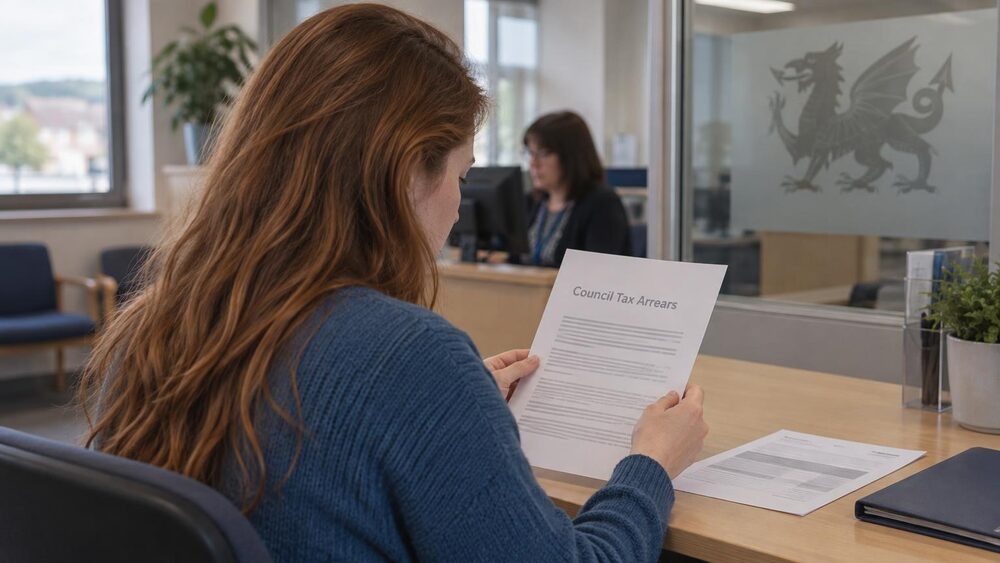
Council tax in Wales is a property-based charge that raises over £2.8 billion a year towards the £11 billion cost of local services, and it is collected by your local council rather than by the Welsh Government1. Each home sits in one of nine bands, A to I, based on what it was worth on 1 April 2003, the date used for Welsh valuations, while England and Scotland still use April 1991 values2. The system itself began across Wales, England and Scotland on 1 April 19933.
Council tax in Wales is a property-based charge that raises over £2.8 billion a year towards the £11 billion cost of local services, and it is collected by your local council rather than by the Welsh Government1. Each home sits in one of nine bands, A to I, based on what it was worth on 1 April 2003, the date used for Welsh valuations, while England and Scotland still use April 1991 values2. The system itself began across Wales, England and Scotland on 1 April 19933.
The Council Tax Protocol for Wales is the part of this that matters most when money is tight. It was launched in 2019, all councils in Wales have committed to following the standards it sets out, and all 22 Welsh authorities endorse it1. It is best practice guidance on how councils should treat people who fall behind, including pausing bailiff action where someone is vulnerable or has a benefit claim outstanding. It is not a law that a court enforces, so it shapes how a council should behave rather than giving you an automatic right.
This page covers how the bill is worked out, how instalments work, what happens from the first missed payment to the whole year's bill falling due, why council tax is treated as a priority debt, and what can follow if arrears build up.
How council tax is worked out and billed
Three things decide what you pay: the valuation band for your home, how much your local council charges for that band, and whether you qualify for a discount or exemption from the full bill8. In Wales the band comes from the property's value on 1 April 2003, the last time Welsh properties were revalued, and the rules assume two or more adults are liable, which is why 50% of the basic bill is based on the band and 50% on household circumstances3. There are exceptions to the duty to pay, which is where discounts, exemptions and reduction schemes come in9.
Your council sends a bill in March showing what you owe for the coming financial year, which starts in April10. If the bill reaches you later than April, perhaps because you have moved house, you have less time to pay and may have to clear it in full before the end of the financial year in March10.
If you cannot pay, the first thing to do is tell the council rather than wait. Councils can let you pay in smaller amounts, and there is a separate Council Tax Reduction Scheme through which Welsh local authorities support low-income households with their bill7. An overpayment of Council Tax Reduction is treated as council tax arrears, so a change in circumstances that creates an overpayment can turn into a debt12.
Paying in instalments: 10 or 12 months
Council tax is normally billed over 10 monthly instalments, which leaves a two-month break in February and March each year13. Councils may also accept weekly payments, and some accept weekly or fortnightly payments14. The annual bill is the same either way; spreading it changes the size of each payment, not the total.
You can ask to spread the same bill over 12 months instead of 10, which reduces what each instalment costs and removes the February and March break6. In England, councils must allow a 12-month spread if you prefer it; in Wales, councils may agree it15. Carers UK and Scope both describe the 12-month option as something you can ask for, and Macmillan's guidance for people dealing with debt says the same16.
If your bill arrives later than April, the 10-month pattern does not apply in the usual way, because there are fewer months left in the financial year to fit the payments into10.
| Option | What it means | Who it tends to suit |
|---|---|---|
| 10 monthly instalments | The default; no payment in February or March13 | People whose income is steady across the year |
| 12 monthly instalments | Same annual bill, smaller monthly amounts, no break6 | People who find the two-month gap hard to budget for |
| Weekly or fortnightly | Some councils accept these14 | People paid weekly |
Missing a payment: from reminder to the whole year's bill
Under the current Welsh rules, if you miss an instalment the council sends a reminder notice giving you 7 days to pay5. If you do not pay within those 7 days, you can become liable for the whole year's council tax instead of just the missed amount6. The Welsh Government has consulted on extending the minimum period to 62 days from one missed instalment to liability for the remaining annual balance, and confirmed in September 2025 that it would support that extension, so the 7-day rule reflects the position as it stands rather than a settled long-term one5.
Councils only need to send reminder notices for the first two missed payments in a financial year, which runs from 1 April to 31 March1. Miss a third payment and you get a final notice instead, telling you to pay the full remaining balance in one go7. A missed payment after 31 December also triggers a final notice and the full remaining balance7. From 1 April 2026, if you miss a council tax payment in Wales, the council will send you a reminder notice20.
Council tax is a priority debt
Council tax is a priority debt, whether it is your current bill or arrears from an earlier year7. That classification matters because it tells you the order to deal with things in: priority debts carry serious consequences if ignored, so they are usually handled before credit cards, overdrafts and other unsecured borrowing22. Council tax is a priority debt because the council has strong powers to make you pay23.
The practical effect is that the ongoing bill and any arrears sit at the front of the queue. Where a council is chasing arrears, it will want the current year's council tax paid plus an extra amount to clear the older debt24. If you are dealing with several debts at once, free and impartial help is available from MoneyHelper, from debt advice charities such as StepChange and National Debtline, and from Citizens Advice, and it costs nothing to ask22.
Arrears, bailiffs and IVAs: what can happen next
If arrears are not cleared, the council has a range of powers. It can take money from your pay or benefits, and it may send bailiffs to take things you own18. The debt can be secured against your home, the council can apply to make you bankrupt, and there is a risk of prison in England but not in Wales22. After bankruptcy, a council or HMRC might still use bailiffs to recover certain debts, and you will not be able to set up a payment arrangement with those bailiffs26.
The Protocol is what sits between you and the sharpest end of that process. Where an enforcement agent suspects vulnerability, they should pause action and provide a report and any available evidence to the local authority, which then decides on next steps3. A pause in enforcement agent recovery should also take place where you have a legitimate and relevant outstanding claim for Council Tax Reduction, Universal Credit or Housing Benefit, or other relevant state benefits, that would clear or significantly reduce the balance3.
"they should at this stage pause action and explain that they will provide a report and any available evidence to the loc"
An Individual Voluntary Arrangement can include council tax arrears from previous years, and current-year arrears may also be included, with your IVA payments adjusted to reflect the change27. Because the ongoing bill is a priority debt, an insolvency practitioner will look at how it is being paid as well as at the arrears going into the arrangement27.
If you rent, council tax can be included in your rent where the tenancy agreement says so, but a landlord cannot require you to make a separate, additional payment to them for council tax28. If you are a landlord in Wales, separate rules on energy efficiency carry a fine of up to £5,000 for renting out a property with a low energy rating or failing to comply with EPC duties, and a risk of losing your Rent Smart Wales licence30.
For wider context on how the Welsh system differs from the rest of the UK, see council tax in Wales and council tax in Scotland. If you are specifically asking whether non-payment can lead to prison in Wales, that is covered in Can you go to prison for not paying council tax in Wales?, and help for people in financial hardship is set out under debt.
Sources30 cited
- Improving the administration and enforcement of Council Tax in Wales Welsh Government, 2025-04-30
- Council tax in Scotland to be frozen: what you need to know Which?, 2023-10-26
- Consultation on improving the administration and enforcement of Council Tax in Wales Welsh Government, 2022-07-12
- Improving the administration and enforcement of Council Tax in Wales: summary of responses Welsh Government, 2025-09-26
- New rules confirmed for fairer council tax collection Welsh Government, 2025-09-26
- Council tax arrears GOV.UK, 2026-09-26
- If you cannot pay your council tax mygov.scot, 2026-04-01
- Council tax GOV.UK, 2026-09-26
- Council tax and the law Carmarthenshire County Council, 2026-01-19
- Paying council tax bills StepChange, 2026-09-25
- Draft report on council tax collection Senedd Cymru, 2024-12-23
- Council Tax Support overpayments Turn2us, 2025-12-09
- Paying council tax Which?, 2026-04-17
- Your priority debts (Scotland) Business Debtline, 2026-09-26
- Your priority debts (England and Wales) Business Debtline, 2026-09-26
- Help with council tax Carers UK, 2026-09-26
- Practical and emotional advice when in debt Scope, 2026-08-05
- Managing debt Macmillan Cancer Support, 2026-09-26
- Council tax arrears (England and Wales) National Debtline, 2026-04
- Cost of living: if you cannot afford your essential costs (England and Wales) Business Debtline, 2026
- Unpaid council tax debt StepChange, 2026-09-25
- What debts to pay first StepChange, 2026-09-25
- Council tax arrears (Scotland) Business Debtline, 2026-09-26
- Debts after death (England and Wales) Business Debtline, 2026-09-26
- Cost of living: if you cannot afford essential costs (England and Wales) National Debtline, 2026-09-25
- Creditors still chasing you after you go bankrupt Citizens Advice, 2021-03-17
- IVA questions PayPlan, 2026-04-21
- Fees you can charge as part of a tenancy GOV.UK, 2026-05-01
- Tenant Fees Act 2019: guidance for tenants GOV.UK, 2026-04-07
- Home energy saving improvements Shelter Cymru, 2026-08-28









 Citizens Advice ScotlandFree advice across Scotland
 Citizens AdviceFree advice on money, consumer and legal problems in England and Wales
 MoneyHelperFree, impartial money and pensions guidance, set up by government
 GOV.UKOfficial information on tax, benefits and government services