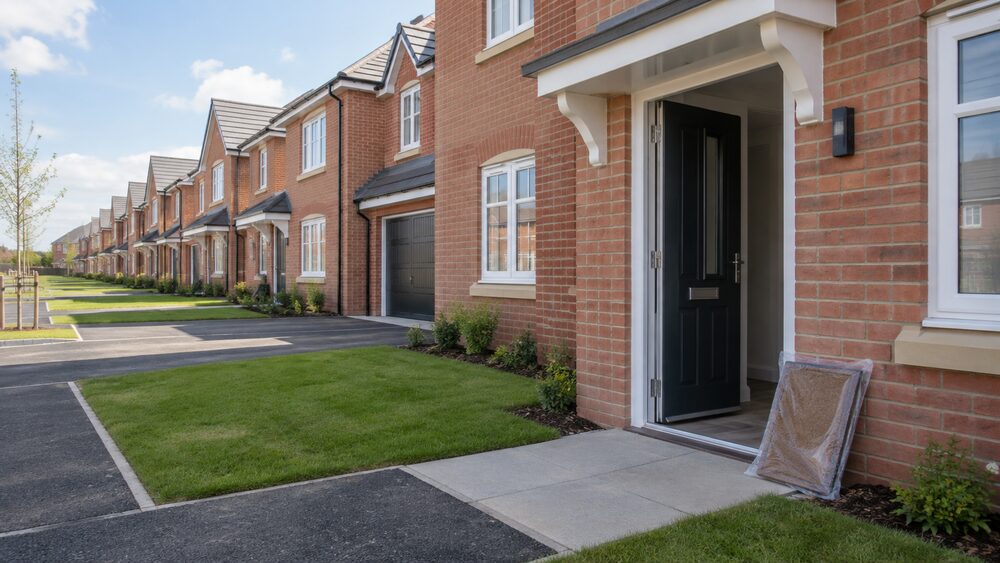
A first-time buyer mortgage is not a different kind of mortgage. It is an ordinary mortgage that a lender is willing to give someone who has never owned a home, usually on a smaller deposit than it would accept from a home mover. The most a lender will typically go to is 95% of the property price, which means a 5% deposit: on a £200,000 home that is £10,000 down and a £190,000 mortgage. Independent guidance puts the minimum deposit for most first-time buyer mortgages at 5% of the purchase price1.
A first-time buyer mortgage is not a different kind of mortgage. It is an ordinary mortgage that a lender is willing to give someone who has never owned a home, usually on a smaller deposit than it would accept from a home mover. The most a lender will typically go to is 95% of the property price, which means a 5% deposit: on a £200,000 home that is £10,000 down and a £190,000 mortgage. Independent guidance puts the minimum deposit for most first-time buyer mortgages at 5% of the purchase price1.
What makes first-time buyers different is the support around the deposit. A Lifetime ISA adds a 25% government bonus to what you save, up to £1,000 a year, and can be used towards a first home costing £450,000 or less2. There is also a new scheme for England, Your First Home, announced on 26 September 2026, which pairs a 2.5% deposit with a 20% government-backed equity loan on new-build homes4.
The rules matter as much as the rates. A Lifetime ISA has to be open for at least 12 months before the money can be used, the property has to come in at or under £450,000, and taking money out for anything else before 60 triggers a 25% charge2.
Mortgages up to 95% of the price: buying with a 5% deposit
A 95% mortgage means the lender advances 95% of the property's value and you find the other 5%. Independent guidance describes this as the standard route onto the property ladder, with a deposit of 5% of the purchase price and a mortgage covering the rest1. Lenders market these deals directly at first-time buyers: first direct says it offers 5% deposit mortgages for first time buyers, and Nationwide says it can offer 95% mortgages for first time buyers with a 5% deposit5.
The trade-off is that a small deposit leaves very little equity at the start. Independent guidance is blunt about it: pay a 5% deposit and your equity, to begin with, will be 5%7. That matters if prices fall, because a borrower with 5% equity can slip into negative equity far sooner than one who put down 20%. It also matters at the end of a fixed deal, when the loan-to-value band you sit in decides which rates are open to you. Our page on loan to value explains how those bands work.
Credit history is the other gate. Independent guidance notes that a first-time buyer with a small deposit looking to get a 95% mortgage may struggle to borrow at such a high loan-to-value with a series of missed payments8. The higher the loan-to-value, the more a lender leans on the credit file, because its cushion is thinner. If there are defaults or late payments in the picture, our guide to getting a mortgage with bad credit sets out the options.
Lifetime ISA: a 25% bonus of up to £1,000 a year towards your first home
A Lifetime ISA is a savings or investment account with a government top-up built in. You must be 18 or over but under 40 to open one, and resident in the UK11. You can put in up to £4,000 per tax year, and the government adds 25% on top, up to a maximum bonus of £1,000 a year3. Independent guidance describes the same terms: a 25% top-up from the government, up to £1,000 a year, for first-time buyers saving into a Lifetime ISA12.
The bonus is paid on contributions, so the amount you receive tracks what you pay in. Save £4,000 in a tax year and the bonus is £1,000; save £1,000 and it is £250. You can carry on paying in until you turn 503. The money can be held as cash or invested, and providers offer both. AJ Bell, for example, describes a 25% bonus every year, up to £1,000, on its ISA13.
There is a separate, older product: the Help to Buy ISA. It paid a 25% government bonus on savings when you bought your first home, capped at £3,000, and the property had to cost £250,000 or less, or £450,000 in London14. Help to Buy ISAs are no longer open to new savers, but if you hold one you can transfer the money into a Lifetime ISA2.
The two bonuses cannot be combined on one purchase. Official guidance states that if you hold both a Help to Buy ISA and a Lifetime ISA, you can only use the government bonus from one of them to buy your first home2. A building society's guidance says the same thing in the same terms16.
| Feature | Lifetime ISA | Help to Buy ISA |
|---|---|---|
| Government bonus | 25%, up to £1,000 a year3 | 25%, up to £3,00015 |
| Annual allowance | £4,000 per tax year3 | Not stated |
| Property price limit | £450,0002 | £250,000, or £450,000 in London14 |
| Open to new savers | Yes, aged 18 to 3911 | No |
Using a Lifetime ISA to buy: the £450,000 limit and 12-month rule
Two conditions decide whether a Lifetime ISA can be used for a purchase. The first is price: the property must cost £450,000 or less2. National Savings and Investments states the same cap, and the money can only be used to purchase a house up to £450,0003. Independent guidance repeats the £450,000 maximum house purchase price1. The cap applies to the purchase price, not to the size of the mortgage, and it applies wherever in the UK the home is.
The second condition is time. You must buy the property at least 12 months after you make your first payment into the Lifetime ISA2. National Savings and Investments puts it as the account needing to be open for at least a year before you can withdraw money to buy your first home3. Open the account and buy within the same year, and the withdrawal does not qualify.
Beyond those two, the standard first-home conditions apply. You must be buying your first home, you must intend to live in it, and you must use a mortgage, not a private loan from a relative2. If you are buying with someone else who also has a Lifetime ISA, official guidance confirms you can both use your savings and government bonus, provided you are both first-time buyers and both meet the conditions2. A building society's guidance says the same: if both buyers are first time buyers, you can both use your Lifetime ISA for the purchase without paying a withdrawal charge17.
Where the 25% Lifetime ISA withdrawal charge applies
Take money out of a Lifetime ISA for anything other than a first home or retirement and the government takes back more than it gave. The charge is 25% of the amount you withdraw3. Withdrawals that are made not for a first home or retirement incur a withdrawal charge of 25%15. Independent guidance describes the same penalty for withdrawing for something other than retirement or buying a first home18.
The charge is designed to claw back the bonus and a little more. Because 25% is taken from the total balance rather than from the bonus alone, a saver who withdraws early can end up with less than they paid in. National Savings and Investments warns that you would be charged 25% of the amount you withdraw, so you could get back less than you put in3. Providers describe the same figure: Hargreaves Lansdown notes that using the Lifetime ISA to buy a home in the first year means paying the 25% government withdrawal charge, and Interactive Investor states the charge is currently 25% of the amount you want to withdraw19.
The charge also bites in one situation buyers do not expect. If a purchase falls through after the money has been released, and the money is not returned, Skipton Building Society says the government withdrawal charge of 25% of the amount withdrawn will apply unless an extension has been agreed21. In other words, a collapsed sale can cost you the bonus if the funds are not put back.
Your First Home: the new equity loan scheme announced for England
On 26 September 2026 the government announced a new equity loan scheme for first-time buyers in England, called Your First Home4. The scheme is for first-time buyers in England buying a new-build property from a participating developer22. It pairs a 2.5% deposit with a 20% government-backed equity loan, leaving a 77.5% mortgage22.
The scheme is not yet open, and the detail is not yet fixed. The government says further details, including costs and implementation timelines, will be announced by the Chancellor at the Budget next month4. Reporting on the announcement says the scheme will be confirmed at the Budget and open for registration by the end of 202622. Until those details are published, no one can say what the loan will cost, how it will be repaid, or which developers will take part.
It is worth separating Your First Home from the schemes that already exist, because they work differently and cover different parts of the UK.
| Scheme | Where it applies | What it does |
|---|---|---|
| Your First Home | England | 2.5% deposit and a 20% government-backed equity loan on new-builds, details to be confirmed at the Budget4 |
| First Homes scheme | England | A 30-50% discount on the purchase price for first-time buyers and keyworkers, launched in 20211 |
| First Homes Fund | Scotland | Up to £10,000 for first-time buyers, cannot be used with other home-buying schemes24 |
| Help to Buy: equity loan | England | A shared equity scheme for first time buyers and existing homeowners who want to move26 |
In Scotland the support runs through the First Homes Fund rather than an equity loan. It offers up to £10,000 to first-time buyers, and the Scottish Government says it cannot be used together with other schemes that help you buy a home, though a Help to Buy ISA or Lifetime ISA can be used for the deposit24. Applicants must be taking out a capital repayment mortgage of at least 25% of the buying price, or the valuation if lower27. The Scottish Government directs buyers to its First Homes Fund guidance for eligibility and step-by-step application instructions28. The earlier First Homes scheme in England was expected to deliver 1,500 First Homes across the country by November 202329.
What protects a first-time buyer
The protections that apply to any mortgage apply here. A lender must assess whether the loan is affordable, and the paperwork you receive before you commit, the ESIS illustration, sets out the rate, the fees and the total cost. Our guide to mortgage rules, your rights and protection covers what a lender must tell you and when.
On the Lifetime ISA side, the protection is the rule itself: the 25% charge is what stops the bonus being used for anything other than a home or retirement, and it is applied by the provider when you withdraw. If a purchase falls through, the money can be returned to the account without the charge, but only if it is returned; Skipton Building Society's guidance notes the charge applies if the money is not returned unless an extension has been agreed21.
If something goes wrong with a mortgage or a Lifetime ISA, a complaint goes first to the firm and then, if unresolved, to the Financial Ombudsman Service. Our page on complaining to the Financial Ombudsman about your mortgage explains the process and the time limits. Free, impartial help on buying a home is available from Citizens Advice, which covers the buying process and where to get support30.
Two further points are worth knowing. If you have a Help to Buy ISA or a Lifetime ISA, you can use it to pay a deposit for a home through Right to Shared Ownership or Rent to Buy31. And the government has said that a new first-time buyer ISA will be offered in place of the Lifetime ISA once available, which means the rules described here may change for savers opening accounts after that point32.
Sources33 cited
- How much deposit do you need for a mortgage? Which?, 2 April 2026
- Withdrawing money from your Lifetime ISA GOV.UK, 28 September 2026
- ISA basics NS&I, 1 September 2026
- Your First Home scheme HomeOwners Alliance, 26 September 2026
- Mortgages first direct, 2026
- How to get mortgage ready Nationwide, 2026
- Negative equity Which?, 10 December 2025
- Getting a mortgage with late payments and defaults Which?, 20 August 2025
- 95% mortgages Which?, 2 April 2026
- 95% mortgages RBS, 25 September 2026
- Who can open a Lifetime ISA GOV.UK, 28 September 2026
- How to buy a house Which?, 29 May 2026
- ISA AJ Bell, 2026
- Home ownership in England House of Lords Library, 26 September 2026
- Different types of savings account Yorkshire Building Society, 26 September 2026
- Lifetime ISA FAQs Newcastle Building Society, 26 September 2026
- The Lifetime ISA (Amendment) Regulations 2024 legislation.gov.uk, 6 April 2024
- Lifetime ISA vs pension Which?, 23 March 2026
- Transferring your existing investments: frequently asked questions Hargreaves Lansdown, 26 September 2026
- LISA vs Stocks and Shares ISA Interactive Investor, 26 September 2026
- Using a Lifetime ISA Skipton Building Society, 25 September 2026
- Help to buy a home mygov.scot, 26 September 2026
- Buying a home Citizens Advice, 25 September 2026
- First Homes Fund: eligibility Scottish Government, 24 June 2026
- First Homes Fund: before you apply mygov.scot, 31 August 2026
- Right to Buy and Right to Acquire Scope, 1 April 2026
- First Homes Fund Scottish Government, 26 September 2026
- First Homes scheme House of Commons Library, 8 July 2026
- Buying a house or flat in London Which?, 19 June 2026
- Buying your first home Barclays, 2026
- Annual savings statistics 2025: background and methodology GOV.UK, 18 September 2025
- Tax Update 2026: simplification, modernisation and fairness GOV.UK, 23 June 2026
- New first-time buyer scheme to be confirmed at Budget GOV.UK, 26 September 2026







 MoneyHelperFree, impartial money and pensions guidance, set up by government
 StepChangeFree debt advice and solutions from a charity
 Financial Ombudsman ServiceFree, independent help when a complaint about a firm is not put right
 Citizens AdviceFree advice on money, consumer and legal problems in England and Wales
 ShelterFree housing advice from a charity