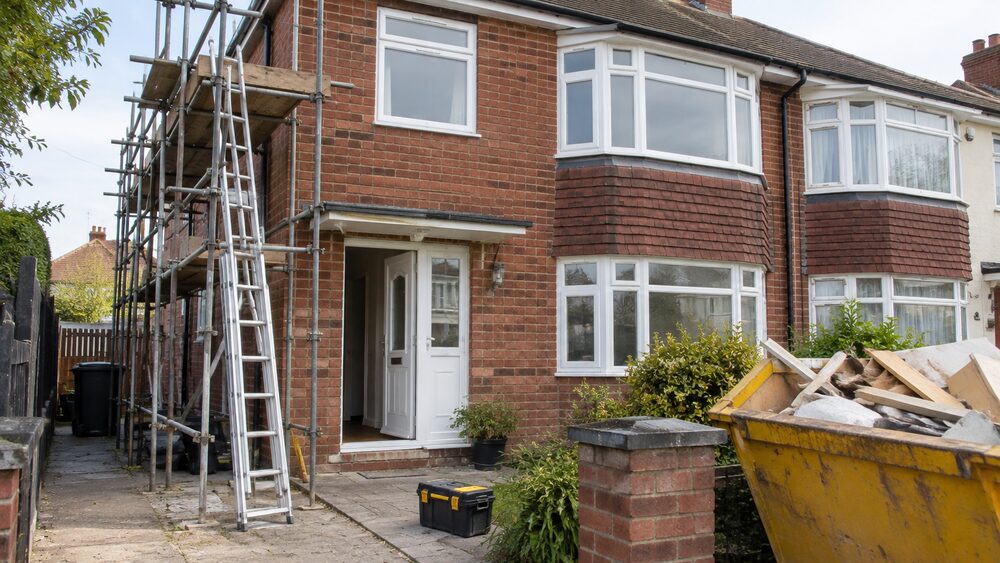
The single difference between a secured and an unsecured loan is what the lender can take if you stop paying. A secured loan is money you borrow that is secured against an asset you own, usually your home, and the lender can sell that asset to get its money back1. An unsecured loan is not linked to items of value like your home or car, so nothing you own is pledged against it2.
That one difference drives everything else. Unsecured borrowing is the ordinary personal loan most people mean when they talk about a loan: typically £1,000 to £25,000, with loans for as much as £50,000 sometimes available3. Secured loans tend to be larger and require an asset for security, such as a house4. In exchange for that security, secured borrowing often carries a lower interest rate than other types of lending5, and it is usually easier to get approved for than a personal loan6.
The trade-off is stark and worth stating plainly. Unsecured loans are less risky than secured loans because you do not risk losing your home if you cannot make the repayments7. With a secured loan, your home may be repossessed if you miss payments8. Everything below sets out how the two compare on amounts, cost, eligibility and what happens when things go wrong.
The difference: whether the loan is tied to something you own
A secured loan means you borrow against an asset, such as a house10. The lender attaches a legal claim to that asset, so if you cannot repay the loan the lender can sell it to recover what it is owed11. In practice the asset is nearly always property: secured loans are tied to an asset you own, usually your home12, and are often described as working like a second mortgage13. Some secured lending is against business premises instead, where the consequence of non-payment is losing your business premises14.
An unsecured loan is the opposite arrangement. It is a loan that is not linked to items of value like your home or car2, and it is not tied to an asset at all15. Instead, the lender decides whether to lend based on the amount you want to borrow, the loan term, your personal circumstances and your credit history, with no collateral required16. Unsecured loans are supported by your creditworthiness and affordability rather than by anything you own17.
The practical consequence is what happens on default. With an unsecured loan, your house is not immediately at risk if you fall into arrears, although the lender can take court action to make you pay the money back9. With a secured loan, the asset itself is the lender's route to repayment, and losing assets like your home or vehicle is usually a last resort but still a real risk18.
| Unsecured loan | Secured loan | |
|---|---|---|
| What backs it | Your creditworthiness and affordability, no asset17 | An asset you own, usually your home1 |
| Typical amounts | £1,000 to £25,000, up to £50,000 sometimes3 | Larger sums, asset required for security4 |
| If you stop paying | House not immediately at risk, but court action possible9 | Home may be repossessed8 |
| Getting out early | Can normally repay at any time, possible interest refund9 | Only by paying in full, early repayment charges often apply5 |
Unsecured loans: typically £1,000 to £30,000 with no collateral
Unsecured borrowing is the mainstream product. Most personal loans are unsecured, meaning the loan is not secured against your home8, and a personal loan is the most common type of unsecured loan4. When you take out a personal loan you borrow a fixed amount from a bank or creditor and repay it in fixed amounts over an agreed number of months or years8.
The amounts cluster in a recognisable band. Usually you can borrow between £1,000 and £25,000 with an unsecured personal loan, although loans for as much as £50,000 are sometimes available3. Unsecured loans usually start from £1,000 and can go up to £25,000 or even £50,000 with some lenders6. One lender describes unsecured loans as tending to be for smaller loan amounts, less than £35,00019, and another says you can typically borrow up to £30,000 and pay it back over between one and seven years20.
What you are not required to do is the defining feature:
- You do not have to own property or put your home at risk21
- You are not required to offer your home as security22
- No asset is used as security18
- You are still legally bound to pay the money back22
Unsecured borrowing is not only personal loans. The category also covers student loans, overdrafts and credit cards6, and most overdrafts, credit cards, catalogues, store cards and personal loans are unsecured23. Buy-now-pay-later agreements, catalogues, credit cards, overdrafts, payday loans, personal loans and store cards all sit in the same broad group23.
Secured loans: larger amounts, but your home is at risk
Secured lending exists to solve a problem unsecured lenders will not take on: larger sums, or borrowers whose credit history would not support an unsecured loan. Secured loans tend to be larger and require an asset for security, such as a house4. Many secured loans are offered as a way to consolidate debts, with interest rates lower than unsecured personal loans because the risk to the lender is reduced5.
The risk does not disappear when the rate falls. It moves to you. Your home or business could be at risk if you cannot keep up the payments on a secured loan24. Secured loans are backed by your property, meaning your home could be repossessed if you are unable to keep up with repayments3. A secured loan means you can lose your home if you do not keep up the repayments25. If you do not keep your payments up on a secured loan you could lose whatever is secured, for example your house if you own it26.
The disadvantages stack up beyond the headline risk:
- Your home or asset is at risk18
- Longer terms often increase the total amount paid18
- Applications can be more complex18
- Some rates may change over time18
- Repayment terms are often a lot longer than unsecured loans, so more interest is paid overall6
Interest rates and total cost compared
The rate difference is the reason people consider secured borrowing at all. Secured loans may offer lower interest rates than for other types of lending5, and a secured loan will generally have a lower rate of interest, but your home or other assets could be at risk19. The lender's reasoning is straightforward: the asset reduces the risk to the lender, so the price of borrowing falls5.
Most unsecured loans have fixed interest rates10, which means the monthly repayment does not move. That is not universal. Some personal loans have interest rates that vary, and there is a risk that this could become hard for you to afford8.
Term length matters as much as the rate. If you take out a loan over a longer period of time you may find that the payments seem lower, but you pay interest for the whole time you owe the money, so you end up paying more8. Secured loan repayment terms are often for a lot longer than unsecured loans, so more interest is paid overall6.
Two worked examples from lenders show how the numbers build up. Borrowing £10,000 over five years at 10% on an unsecured loan means £2,748.23 in interest paid overall21. On a smaller scale, spreading the cost of a £5,000 purchase over three years with a loan would accumulate £532 in interest27. One comparison of the same amount over the same term found the unsecured loan costs £1,425 more because it has a higher rate21. Another comparison of the same shape found the opposite direction, that the unsecured option was £1,374 cheaper. The two documents disagree, and the difference depends on the rates each assumes, so neither figure should be treated as a general rule.
Guarantor and debt consolidation loans: secured or unsecured
Two product types sit awkwardly across the secured and unsecured divide, and both are worth understanding before you sign anything.
A guarantor loan is a loan provided to borrowers only if another person, for example a friend or relative, guarantees to make the payments if the borrower does not28. The guarantor is the security, in effect, rather than an asset. In some cases they may secure the loan against their property29. Getting a secured loan can be easier than an unsecured loan when your credit score is poor and you do not have a guarantor30, which is why the two routes are often weighed against each other.
Debt consolidation is the other crossover. Consolidation can be done either through secured borrowing against an asset, such as a property, or through further unsecured borrowing31. A consolidation loan may be an unsecured personal loan, or, if you are a homeowner, it may be secured against your home32. For most borrowers, a debt consolidation loan is like any other personal loan for a holiday, new car or extension: it is unsecured, not linked to your home or any other asset13. The loan itself will typically be unsecured if you are borrowing less than £5,000, or secured against your home if you are borrowing more33.
The eligibility picture differs between the two. Secured consolidation loans are easier to get approved for, but with much higher risks if you cannot repay34. Secured loans may be lent to people with a bad credit history who would not get an unsecured personal loan5, and secured debt consolidation loans are sometimes offered if you have a lower credit score because it gives the lender more security if you cannot pay it back35. If you have a poor credit rating, you may only be able to get a loan at a high interest rate or secured against your home36.
Unsecured consolidation loans are not linked to your home37, and lenders will look at your credit history and affordability to check whether they should lend to you35. A low credit score or a less-than-ideal credit history can make it harder to get approved for consolidation loans, and may mean being offered higher interest rates than you pay now, or higher risk secured loans38.
Missed payments: fees, credit file damage and repossession
What happens when a payment is missed is where the two products diverge most sharply, and it is worth reading this section before choosing rather than after.
On an unsecured loan, late or missed repayments can result in fees and charges, as well as negatively impact your credit score and your ability to borrow money in the future10. You will not risk losing an asset but could be charged for late or missed payments15. If you miss payments it will affect your credit rating and can cost you money in fees depending on the lender, but you are not at risk of losing your house or car17. Late payment fees could be added to the amount you owe, and interest added will only increase the amount you owe; you will also receive a default notice on your credit file, and there is the possibility of county court judgments6.
On a secured loan the consequences run further. Extra charges and harm to your credit score come first, then the lender taking steps to recover the asset, and losing assets like your home or vehicle as a last resort, but still a real risk18. Your home may be repossessed if you miss payments8. A mortgage or secured loan is a priority payment, and the consequence of non-payment is repossession of the property39.
The distinction between priority and non-priority debt matters here. Credit cards, unsecured loans, store cards and unsecured overdrafts are usually non-priority debts40. If your consolidation loan is an unsecured loan, it is classified as a non-priority debt; if you do not pay, you can be taken to court and risk having a county court judgment against you32. The consequences of failing to keep up with priority payments are much more severe than failing to maintain unsecured debt repayments31.
Repaying early, overpaying and complaints
The exit routes differ as much as the entry routes. You can normally pay off a personal loan at any time before the end of the term, and you may be entitled to a refund of interest if you do9. For secured loans the position is tighter: there are often penalties for paying off secured loans early, known as early repayment charges5, and the only way to get out of a secured loan is to pay it off in full5.
Complaints about loans do reach the ombudsman in volume. In the first quarter of 2026/27, 2,103 complaints about personal loans were opened42. In the same quarter a year earlier, 1,904 personal loan complaints were recorded with a 26% uphold rate43. That uphold rate is the share of complaints the ombudsman found in the consumer's favour, and it is a useful benchmark: roughly one in four personal loan complaints succeeded.
Complaints can cover the sale as well as the loan itself. One ombudsman case study concerned the non-advised sale of a single-premium payment protection insurance policy with a ten-year unsecured loan in 2006, and the complaint was upheld. If a lender has treated you unfairly, the route is a complaint to the firm first and then to the Financial Ombudsman Service if you are not satisfied.
Where the protection stops
The rules protect you in some places and not others, and it is worth being precise about which is which.
Both secured and unsecured lenders will look at your credit history to decide if they should lend the money to you6. An application for an unsecured loan is primarily based on your personal credit rating, financial status and the amount borrowed22, and eligibility depends mainly on income and credit history18. Checking eligibility does not affect your credit score with some lenders, which makes it worth checking before a full application.
On the unsecured side, the protection is that your home is not immediately at risk if you fall into arrears, although the lender can take court action to make you pay the money back9. That is a real protection but not an absolute one: a court judgment can follow, and enforcement can follow that.
On the secured side, the protection is thinner. Your home or business could be at risk if you cannot keep up the payments24, and your home could be repossessed if you have used it as security and cannot keep up the payments on the agreement. There is no equivalent of the unsecured cushion, because the asset is the lender's remedy.
Some uses are excluded outright. Lenders will say you are not allowed to use unsecured debt consolidation loans for things like buying property or making mortgage payments6. Beyond those stated exclusions, the terms of the individual agreement govern what the money can be used for.
If you are weighing a loan against other ways of raising money, the wider guides on how personal loans work, debt consolidation loans and getting a loan with a poor credit history set out the alternatives in more detail. If you are already behind on a secured loan, missing secured loan repayments and your home covers what happens next, and what to do if you can't repay a loan covers the unsecured side.
Sources43 cited
- Home Owners' Support Fund: if you're separated from your partner mygov.scot, 2026-07-14
- What do I need to know about debt Bank of England, 2025-08-19
- Personal loans explained Which?, 2026-09-18
- Loans explained HSBC UK, 2026
- Secured loan debt StepChange, 2026-09-25
- Secured and unsecured consolidation StepChange, 2026-09-25
- Personal loan debt StepChange, 2026-09-25
- Personal loans Citizens Advice, 2026-09-25
- What is an unsecured loan HSBC UK, 2026
- Borrowing money Bank of Ireland UK, 2026-09-25
- Loans guides Experian, 2026
- How do debt consolidation loans work Barclays, 2026
- Self-employed debt advice StepChange, 2026-09-25
- Secured vs unsecured loans Halifax, 2026-09-27
- Reasons to get a personal loan M&S Bank, 2025-10
- Personal loans 118 118 Money, 2026
- Secured vs unsecured personal loans Post Office, 2026-09-14
- About bad credit loans Tesco Bank, 2026-09-25
- What is a personal loan M&S Bank, 2026-06
- Unsecured loans Experian, 2026
- What are unsecured loans Barclays, 2026
- What is unsecured debt National Debtline, 2026-09-25
- Budgeting, saving and borrowing Business Debtline, 2026-09-26
- Top tips for borrowing Citizens Advice, 2026-09-25
- Priority and non-priority debts One Parent Families Scotland, 2026-01-22
- How to pay for home improvements in 2026 Which?, 2026-02-14
- Guarantor loans Financial Ombudsman Service, 2026-09-26
- Guarantor loan debts StepChange, 2026-09-25
- Loans for bad credit with no guarantor Experian, 2026
- Debt solutions Debt Advice Foundation, 2026
- Consolidating debts Shelter Cymru, 2026-08-30
- What happens in a debt consolidation program Debt Advice Foundation, 2020-05-26
- Consolidation and bad credit StepChange, 2026-09-25
- Consolidating debts nidirect, 2025-09-11
- Free debt consolidation StepChange, 2026-09-25
- Debt consolidation calculator StepChange, 2026-09-25
- Which bills are most important to pay first Mental Health and Money Advice, 2025-09-08
- Selling assets to clear debt Business Debtline, 2026-09-26
- Quarterly complaints data Q1 2026/27 Financial Ombudsman Service, 2026
- Quarterly complaints data Q1 2025/26 Financial Ombudsman Service, 2025-08-07
- PPI case studies Financial Ombudsman Service, 2026-09-18
- Unsecured debt consolidation loan 118 118 Money, 2026
- Debt consolidation Business Debtline, 2026-09-26



 MoneyHelperFree, impartial money and pensions guidance, set up by government
 StepChangeFree debt advice and solutions from a charity
 National DebtlineFree debt advice by phone, webchat and online
 Financial Ombudsman ServiceFree, independent help when a complaint about a firm is not put right
 Citizens AdviceFree advice on money, consumer and legal problems in England and Wales