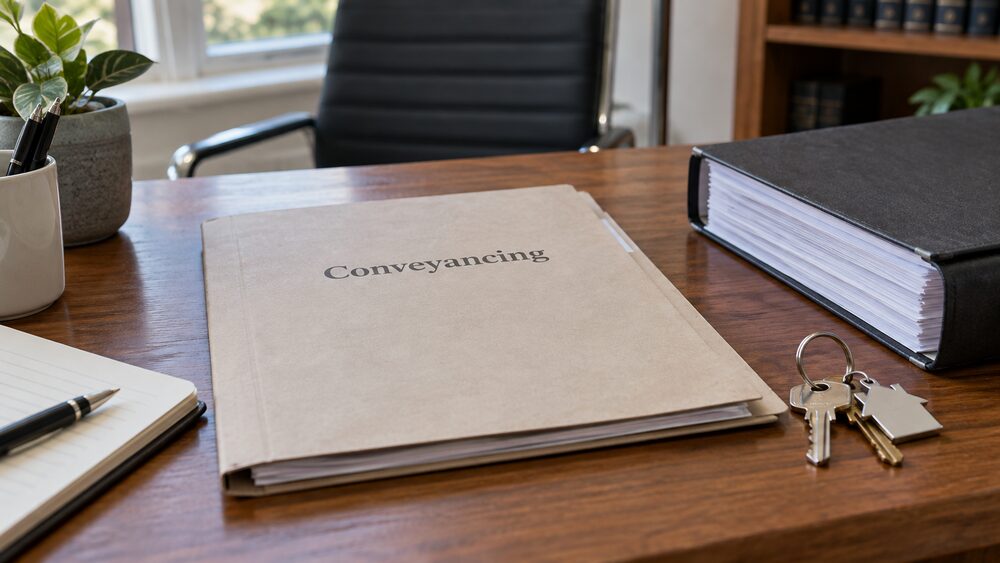
Conveyancing is the legal process involved in property transactions: the work that transfers ownership of a home from the seller to you, checks that the property is what it appears to be, and registers you as its owner1. When you buy a house or flat in England or Wales, an offer you make is not legally binding until contracts are exchanged, so almost everything before that point is preparation that either side can walk away from2. The conveyancer's job is to make sure that when you do become bound, you know exactly what you are buying.
The work sits alongside, and is separate from, everything else in a purchase. Your mortgage lender arranges its own valuation, a surveyor looks at the condition of the building, and the estate agent markets the property. The conveyancer looks at the law: who owns the home, whether anyone else has rights over it, whether the local authority or the land itself hides problems, and whether the money and the deeds change hands correctly on the day.
What conveyancing covers when you buy a home
Conveyancing covers every legal step between your offer being accepted and the home being registered in your name. That includes checking the seller actually owns the property and has the right to sell it, examining the title deeds, raising questions about the property and its history, ordering searches from the local authority and other bodies, checking the mortgage offer, handling the deposit and the completion payment, paying any property tax that is due, and registering the change of ownership1.
The scope depends on the property. A freehold house with clean title is the straightforward case. A leasehold flat adds a layer of work because the conveyancer must examine the lease, its covenants and the ground rent arrangements. A shared ownership or equity loan purchase adds another, because a housing association or government scheme administrator is involved and has its own requirements. If you are buying with a Help to Buy equity loan, for example, your conveyancer sends the administrator a letter of undertaking telling it your completion date, the home's value and confirming agreement to pay the correct amount, and the administrator sends back an Authority to Complete confirming the payment date and amount6.
Conveyancing also covers the paperwork of joint ownership. If you are buying with someone else, the conveyancer arranges how the ownership is held, which affects what happens if the relationship ends or one of you dies. Guidance for Scottish buyers lists this among the solicitor's core tasks, along with checking title deeds, negotiating the contract, transferring funds and taxes, and putting the property in your name7.
Who does it: a solicitor or a licensed conveyancer
Two kinds of professional do this work in England and Wales: a solicitor, and a licensed conveyancer, described in independent jargon guides as "an alternative to a solicitor, qualified to act in the sale or purchase of a property"1. Both can handle a standard purchase. A solicitor is a fully qualified lawyer who may also handle other legal work; a licensed conveyancer specialises in property. The dedicated comparison of a solicitor or conveyancer sets out the differences in detail.
The rules on who counts as an eligible conveyancer are set in legislation and differ by nation. In Scotland, an eligible conveyancer is a solicitor or advocate within the meaning of section 65 of the Solicitors (Scotland) Act 1980, or a conveyancing practitioner as defined in section 23 of the Law Reform (Miscellaneous Provisions) (Scotland) Act 1990. In Northern Ireland, it is a person enrolled as a solicitor of the Court of Judicature of Northern Ireland under the Solicitors (Northern Ireland) Order 19768.
Some schemes restrict who you can use. Applicants to Help to Buy - Wales must use a solicitor or conveyancer who has undertaken Help to Buy - Wales training, and the Welsh Government publishes a list of trained conveyancers. That list comes with an explicit warning: inclusion on it is not an endorsement or recommendation of that conveyancer, or of any conveyancer, and must not be treated as such9.
One practical point matters if you are buying with a mortgage: your lender will only lend on a purchase handled by a conveyancer on its panel of approved firms. If you instruct someone who is not on the panel, the lender will appoint its own conveyancer as well, which can add cost and delay. Checking this early, and asking a prospective conveyancer whether they are on your lender's panel, avoids a common hold-up.
Conveyancing costs: legal fees of £300 to £1,500 plus disbursements
Independent cost guidance puts conveyancing legal fees for buying a house at between £300 and £1,500, usually linked to the value of the property3. The same guidance gives a slightly different framing of averages: typical conveyancing fees when buying range from around £500 to £1,150, plus disbursements3. A broader cost-of-moving breakdown puts the average conveyancing cost at £1,050 for buying and selling an averagely priced property4. A separate analysis of the average cost of moving in England puts the average at £2,182 as of November 2025, a higher figure that reflects the full legal bill on a typical transaction rather than a starting price10.
On top of the legal fee come disbursements: third-party charges your conveyancer pays on your behalf, such as local authority searches and Land Registry registration, which could cost up to £7003. Local searches alone run from £250 to £450 when buying4.
| Cost | Typical amount | Notes |
|---|---|---|
| Legal fees, buying | £300 to £1,500 | Usually linked to property value3 |
| Legal fees, selling | £600 to £800 | Lower than buying because fewer searches4 |
| Disbursements | up to £700 | Searches, Land Registry and other third-party charges3 |
| Local searches | £250 to £450 | Part of the buying process4 |
| Leasehold extra | £100 to £300, or around £300 more | Additional legal work on leaseholds3 |
| Right to Buy legal fees | £500 to £700 | Solicitor or licensed conveyancer11 |
When you pay also follows a pattern: an initial fee is usually paid upfront when the work starts, and the full amount is due on completion4. Some schemes can help with the cost. The Help to Stay - Wales scheme covers conveyancing costs up to £1,000 plus VAT for eligible homeowners9, and Right to Buy guidance notes that legal costs for a purchase can vary, typically £500 to £70011. The full picture of what buying costs, including tax and surveys, is on the costs of buying a house page.
How long it takes: typically 6 to 8 weeks
Official house price statistics give a typical figure: a house purchase can take 6 to 8 weeks to reach completion5. Independent guides give a range of views. One describes the process as taking around 6 weeks if there are no issues or hold-ups, but potentially a few months, particularly in a chain; another gives 6 to 12 weeks as the typical span. The documents differ, so treat 6 to 8 weeks as the typical case and anything from a few months upward as possible when complications arise.
What makes it take longer is usually outside your conveyancer's hands. A chain of linked purchases means everyone moves at the speed of the slowest link. Searches take time to come back from the local authority. Leasehold purchases need information from freeholders or managing agents, who may be slow. Mortgage offers, survey results and scheme administrators, such as Help to Buy, each add their own steps6.
The gap between exchange and completion is a separate slice of time within the whole. One guide says completion often takes place around two weeks after exchange, though this is flexible and you agree a convenient date with the seller12. Another says it usually takes place about four weeks after exchange, although it can be earlier13. The narrower question of how long between exchange and completion is covered in its own guide, as is how long buying takes after an offer is accepted.
The conveyancing process step by step
The process in England and Wales runs in a broadly fixed order, though steps overlap in practice. Your offer is accepted, but is not legally binding2. You instruct a conveyancer, who takes an initial fee and starts work4. The conveyancer checks the title, orders searches, raises enquiries with the seller's conveyancer and reviews your mortgage offer. Once everything is satisfactory, contracts are exchanged and the deal becomes binding12. On the agreed completion date, the purchase money is sent, the seller releases the keys, and the remaining legal fee falls due4. Finally, the conveyancer registers the change of ownership and deals with any property tax.
Where a government scheme is involved, extra steps slot in. With a Help to Buy equity loan, the conveyancer's letter of undertaking and the administrator's Authority to Complete sit between the normal stages6. With a Lifetime ISA, the conveyancer is involved in the withdrawal process, and if the purchase does not complete, the conveyancer must provide specified information, including a declaration that the purchase has not completed, the amount of the withdrawal being returned and any shortfall, the account investor's name and address, the Lifetime ISA account number, and the conveyancer's registration number with their professional body14.
Searches and enquiries: what your conveyancer checks
Searches are the checks your conveyancer makes with outside bodies about the property and its surroundings. Local searches, costing from £250 to £450 when buying, are the core of this4. They are disbursements: money your conveyancer pays to third parties and passes on to you, and they can total up to £700 alongside other third-party charges such as Land Registry registration3.
Enquiries are the written questions your conveyancer puts to the seller's conveyancer, based on the title deeds, the seller's property information forms and the search results. The purpose is to surface anything that would affect your decision or your lender's: restrictions on the use of the property, disputes, planning matters, or anything in the title that limits what an owner can do. A covenant is a condition contained in the lease that the buyer must comply with, and a restrictive covenant prohibits the owner from doing something1, so these are checked before exchange.
Searches are not the same as a survey. A survey looks at the building's condition. The Financial Ombudsman Service, which handles complaints about mortgage valuations and surveys, notes that a full structural survey is likely to be of use if you want to know about possible future expense, want to negotiate a lower purchase price, or want to decide whether to go ahead with the purchase15. Your conveyancer's searches tell you about the land and the law; a surveyor's report tells you about the bricks.
Leasehold homes add work and cost
Buying a leasehold property means the conveyancer must examine the lease itself: its length, its covenants, the ground rent it charges and any conditions on the property's use. That is more work than a freehold purchase, and it is charged for. Independent guidance says there is usually an additional charge of between £100 and £300 for the extra legal work involved in leasehold sales10, and other cost guidance puts the extra at around £300 more when buying a leasehold property3.
The lease's remaining length matters for what you are buying. Right to Buy guidance gives an example of how a lease shortens over time: if you buy your home on a 125-year lease and sell it after 15 years, the buyer will get a 110-year lease11. Extending a lease later carries its own costs: on top of the premium for the extra years, a leaseholder may need to pay for legal advice from a solicitor, a lease extension valuation report from a surveyor, the freeholder's reasonable legal and own valuation costs, and Land Registry fees16. The premium itself depends on the value of the property, the number of years left on the lease, the annual ground rent, the value of improvements paid by the leaseholder, and the expected rate of returns on investments16.
The full picture of leasehold purchases, including ground rent and service charges, is in the guide to buying a leasehold property, and the comparison of freehold vs leasehold explains the difference in what you own.
Exchange of contracts is the point you are legally bound
Exchange of contracts is the moment the purchase becomes real in law. Official guidance is plain: the exchange of contracts to buy the property is the point where the sale is legally binding2. Until then, an offer is not legally binding and either side can withdraw. After exchange, both parties become legally bound to complete the deal and can no longer change their minds without financial repercussions1.
Mechanically, exchange happens when the buyer's and seller's legal representatives swap signed contracts, and the buyer pays the deposit12. That deposit is at risk if you then fail to complete, which is why the checks before exchange matter so much: once contracts are exchanged, the enquiries, searches and mortgage arrangements are done, and the only remaining step is paying.
The timing of exchange within the process is worth understanding. Because nothing before exchange is binding, a buyer can spend hundreds of pounds on searches and a survey on a purchase the seller can still withdraw from, or on which they can be gazumped. The guide to what 'subject to contract' means and the page on avoiding gazumping cover this gap and what can be done about it. Buildings insurance is another point that turns on exchange, since the risk in the property typically passes to the buyer there: see when buildings insurance is needed.
Completion: paying the seller and registering the home
Completion is the day the money moves and you get the keys. The remaining legal fee falls due at this point, following the common pattern of an initial fee paid when work started and the full amount due on completion4. Your conveyancer sends the purchase money to the seller's conveyancer, the seller releases the keys, and the home becomes yours to live in.
The legal work does not stop there. Your conveyancer pays any property tax due and registers the change of ownership. In England and Northern Ireland, Stamp Duty Land Tax is paid through a return to HMRC, and your conveyancer normally submits it; the SDLT4 form guidance notes that where a transaction involves leases, an extra form is filled in for each lease, and if a transaction involves 100 or more properties a separate schedule is completed for the rest17. Northern Ireland guidance lists the one-off costs of buying as a solicitor, an independent surveyor, a mortgage arrangement fee, a Land Registry fee and Stamp Duty18. In England and Northern Ireland, you do not pay Stamp Duty on the first £125,000 of a property's price4, and the rates above that are set by HM Treasury: the residential rate for the portion of value in the £0 to £125,000 band is 5% for transactions where that band applies above the threshold from 1 April 202519. The detailed rates are on the Stamp Duty Land Tax page.
Registration puts the property in your name at the land registry. The guide to registering ownership after completion covers HM Land Registry, Registers of Scotland and Land & Property Services. Evidence requirements can be strict: Revenue Scotland, for example, accepts a copy of the disposition of sale, a copy of the Land Registration documents, or a letter from your solicitor that clearly states the date of sale, as evidence for reclaiming the Additional Dwelling Supplement20.
Remortgaging still needs conveyancing, but it is quicker
A remortgage is defined in official lending statistics as occurring when existing borrowers redeem their current mortgage in favour of a new one secured on the same property, but with a different mortgage lender21. Because the property changes hands in law only in the sense that a new lender takes a charge over it, the conveyancing is narrower than a purchase: there is no seller, no chain and usually no local searches on the same scale. The conveyancer checks the title, deals with redeeming the old mortgage, registers the new lender's charge and handles any equity released.
People remortgage for different reasons. Independent debt guidance notes that remortgaging can improve a borrower's situation in two ways: releasing equity, which is taking a lump sum from the value of the home, or reducing the monthly mortgage payment. It also notes that you can remortgage even if you have debt, and that what matters most is how well you are keeping up with payments to those debts22. Those are the borrower's circumstances, though, not the conveyancing: the legal work is the same either way.
If the remortgage is part of a scheme, extra steps apply. A Help to Buy equity loan repayment, for instance, runs through the conveyancer's letter of undertaking and the administrator's Authority to Complete, just as a purchase does6.
Scotland and Northern Ireland work differently
The process described above is the England and Wales one. Scotland works differently, and not only in its land tax, which is Land and Buildings Transaction Tax rather than Stamp Duty20. In Scotland you use a conveyancing solicitor, a type of solicitor that specialises in property purchases, and the solicitor's role is broader at an earlier stage: making offers on properties, communicating with the seller's solicitor, checking the title deeds, negotiating the contract, dealing with the paperwork, transferring funds and taxes, putting the property in your name, and arranging joint ownership if you are buying with someone else7. The definition of who is eligible to do the work is set in Scottish legislation, covering solicitors, advocates and conveyancing practitioners8. The guide to buying a home in Scotland covers the whole process, including the point at which a Scottish offer becomes binding, which comes much earlier than in England and Wales.
Northern Ireland also differs. The eligible conveyancer there is a person enrolled as a solicitor of the Court of Judicature of Northern Ireland under the Solicitors (Northern Ireland) Order 19768. Official NI guidance walks through buying a home step by step and lists the same categories of one-off cost, including the solicitor, the surveyor, the Land Registry fee and Stamp Duty18. Exchange of contracts remains the point where the sale is legally binding23. The guide to buying a home in Northern Ireland sets out the detail.
Wales follows the England process closely, with Land Transaction Tax in place of Stamp Duty, and scheme-specific requirements such as the trained-conveyancer rule for Help to Buy - Wales9. See buying a home in Wales.
Sources23 cited
- Home buying and selling jargon HomeOwners Alliance, 2026-07-31
- Buying a home GOV.UK, 2026-09-26
- Cost of buying a house calculator HomeOwners Alliance, 2026-06-11
- Cost of moving calculator HomeOwners Alliance, 2026-06-11
- UK House Price Index for February 2026 GOV.UK, 2026-04-22
- Help to Buy equity loan repayment application checklist GOV.UK, 2024-04-04
- Using a solicitor to buy a home in Scotland Shelter Scotland, 2024-07-24
- Individual Savings Account Regulations 1998, Schedule, paragraph 7 legislation.gov.uk, 2026
- Help to Buy - Wales trained conveyancers Welsh Government, 2025-03-18
- The cost of selling a house Which?, 2026-01-27
- Your Right to Buy your home: a guide GOV.UK, 2026-04-08
- How to buy a house Which?, 2026-05-29
- Buying a home Citizens Advice, 2026-09-25
- Individual Savings Account Regulations 1998, Schedule, paragraph 9 legislation.gov.uk, 2026
- Mortgages: valuations and surveys Financial Ombudsman Service, 2026-09-26
- Leasehold extension calculator HomeOwners Alliance, 2025-08-21
- How to send a Stamp Duty Land Tax return GOV.UK, 2026-06-26
- Buying a home: things to consider nidirect, 2026-02-25
- Budget 2025: Annex A, rates and allowances HM Treasury, 2025-12-05
- How to claim repayment of the Additional Dwelling Supplement Revenue Scotland, 2025-10-02
- Further details about total lending to individuals data Bank of England, 2024-05-13
- Remortgaging to pay off debt StepChange, 2026-09-25
- Buying a home: a step by step guide nidirect, 2026-09-26

 MoneyHelperFree, impartial money and pensions guidance, set up by government
 Citizens AdviceFree advice on money, consumer and legal problems in England and Wales
 ShelterFree housing advice from a charity
 GOV.UKOfficial information on tax, benefits and government services
 Financial Ombudsman ServiceFree, independent help when a complaint about a firm is not put right