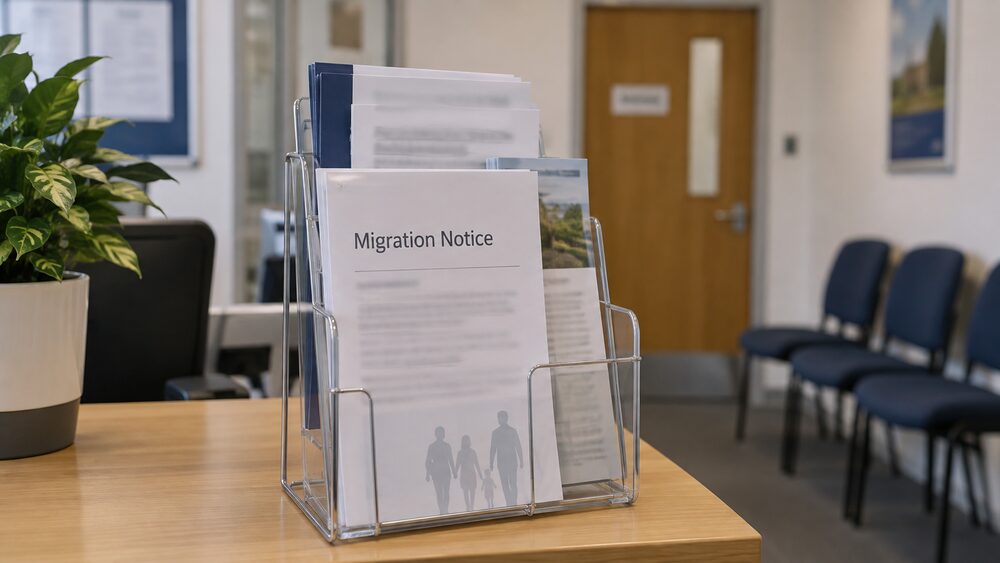
If you get a Migration Notice, it means the benefits you have been claiming are ending and you need to claim Universal Credit instead. The letter will tell you when your old benefits will stop and give you a deadline to make your claim. By law, you have three months from the date the notice is issued to claim1.
If you get a Migration Notice, it means the benefits you have been claiming are ending and you need to claim Universal Credit instead. The letter will tell you when your old benefits will stop and give you a deadline to make your claim. By law, you have three months from the date the notice is issued to claim1.
You will not be moved automatically. Claiming before you get the letter can mean you get less money, because the rules for Universal Credit are different from your existing benefits2.
Up to the end of June 2026, 2.4 million individuals in 1.8 million households had been sent a migration notice3. The process is known as managed migration, and it is how the Department for Work and Pensions (DWP) is moving people who are still on older benefits onto Universal Credit3.
What a Universal Credit Migration Notice is
A Migration Notice is a letter telling you that your current benefits are ending and that it is time to claim Universal Credit. It is part of a process called managed migration, which began in October 2023 and is how the government is moving people who are still on older benefits onto Universal Credit8.
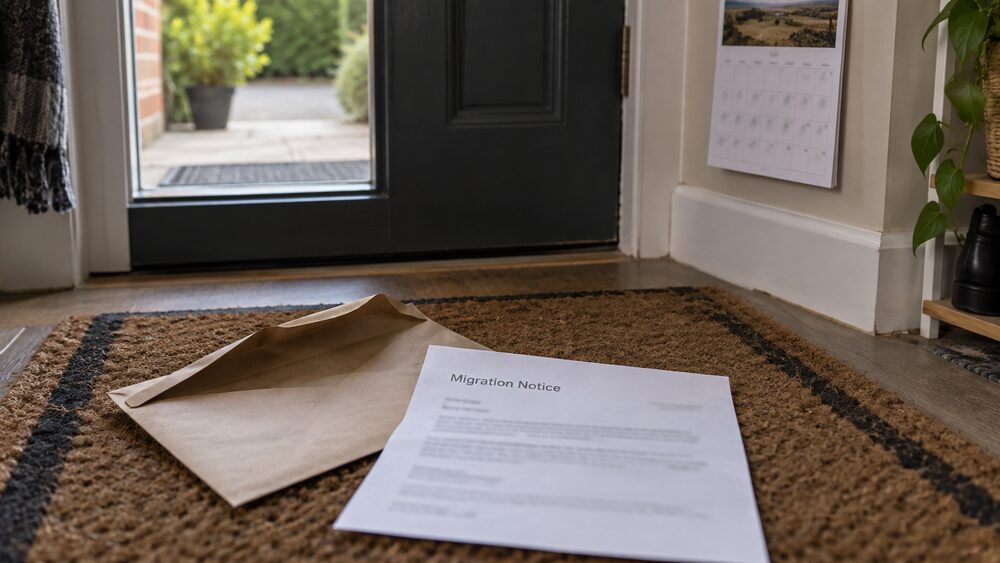
The letter is not a bill or a demand. It is a formal notice that your legacy benefits will stop on a particular date, and it gives you a deadline to claim Universal Credit. The notice will give you a deadline to apply for Universal Credit5. If you do not apply in time, you might receive less Universal Credit5.
Universal Credit is replacing six benefits, commonly referred to as the legacy benefits3. These are Income Support, income-based Jobseeker's Allowance, income-related Employment and Support Allowance, Housing Benefit, Child Tax Credit and Working Tax Credit6. Once you have moved to Universal Credit, you cannot go back to these benefits9.
The DWP issues regular reminders by post, text and telephone during the three-month notice period10. This is to make sure you do not miss your deadline. If you have received a Migration Notice, moving to Universal Credit will not affect your eligibility for Cost of Living payments11.
You will not be moved automatically: wait for your letter
It is important that you do not do anything until you receive your letter. You will not be moved automatically12. This is one of the most common misunderstandings about managed migration. People sometimes think they will be transferred onto Universal Credit without having to do anything, but that is not how it works.
You will not be transferred to Universal Credit automatically, you will need to apply online once your letter comes in13. If you apply before you get your letter, you might get less money2. This is because the eligibility rules for Universal Credit may be different from your existing benefits, and you may lose access to some benefits if you do not claim Universal Credit14.
If you already receive any of these benefits, you do not need to do anything. The Department for Work and Pensions (DWP) will contact you if you are being moved to Universal Credit15. The DWP will inform you by letter when they want you to move over to Universal Credit and will give you a time limit for claiming16.
Your deadline to claim Universal Credit
The deadline is printed on your Migration Notice letter. By law, you have three months from the date that your Migration Notice is issued to make your claim for Universal Credit1. The notice will give you a deadline to apply for Universal Credit5.
The Migration Notice letter from the DWP will tell you that you have to apply for Universal Credit within three months9. There will be a deadline date on your Migration Notice. This is the date that your legacy benefits will stop coming in18.
If you are getting Housing Benefit, you will receive a letter from the Department for Work and Pensions (DWP). The letter is called a migration notice and gives a deadline to apply for Universal Credit19. If you do not apply in time, you might receive less Universal Credit19.
The deadline is not flexible. You must claim by the date on your letter to keep receiving financial support12. If you miss it, your legacy benefits will stop and you may have to claim Universal Credit at a lower rate or wait for a new claim to be processed.
How to claim once you have your Migration Notice
Once you have your letter, you need to make a claim for Universal Credit. You will need to apply online once your letter comes in13. The claim process involves setting up an online account, providing information about your circumstances, and verifying your identity.
If you are part of a couple, each claimant will receive their own Migration Notice, and both must make their own valid claim for Universal Credit20. The claims are linked together as a joint claim via a linking code provided by the Department for Communities20.
You can only get Transitional Protection if you have received a Migration Notice letter from the Department for Communities and you claim Universal Credit within the three-month deadline date on your letter4. If you made a successful claim for Universal Credit after receiving a managed migration notice, you might already be getting transitional protection21.
People who claim Universal Credit after receiving their Managed Migration Notice letter are called managed migrants7. Sometimes you will be paid an extra payment called a transitional protection payment9.
What happens to your legacy benefits when you move
When you claim Universal Credit, any benefits it replaces will stop4. Once you have moved over to Universal Credit, you will not be able to claim the legacy benefit anymore9. You cannot return to legacy benefits once you have made the claim23.
Universal Credit is slowly replacing earlier means-tested legacy benefits, and first-time claimants may be directed to apply for Universal Credit before anything else24. The migration of Tax Credit and legacy benefit claimants to Universal Credit began in October 2023 and is known as Move to Universal Credit8.
If you currently receive one of those legacy benefits, you will have to move onto Universal Credit by the end of 202525. They will be replaced by Universal Credit by March 202626. Housing Benefit is being replaced by Universal Credit27.
The DWP has finished the natural migration of people on legacy benefits and will move people already on benefits without a change in circumstances to Universal Credit28. You will receive a letter asking you to claim Universal Credit by a particular date, and you cannot return to legacy benefits once you have made the claim23.
Where to get free help with moving to Universal Credit
You do not have to work through this alone. There are free, impartial services that can help you understand your Migration Notice, check what you are entitled to, and support you with your claim.
The DWP will inform you by letter when they want you to move over to Universal Credit and will give you a time limit for claiming16. If you already receive any of these benefits, you do not need to do anything. The Department for Work and Pensions (DWP) will contact you if you are being moved to Universal Credit15.
You can get free help from:
- MoneyHelper, the government's free money and pensions guidance service
- Citizens Advice, which offers free, independent advice on benefits
- Turn2us, which has a benefits calculator and grants search
- StepChange, which offers free debt advice if you are struggling with money
- Shelter for housing and benefits advice if you rent
These services do not charge for their help. They can explain what your letter means, help you gather the information you need for your claim, and tell you what to do if something goes wrong.
If you are a student, you may be able to claim Universal Credit if you received a Migration Notice telling you to move to Universal Credit and were participating in a course of education before claiming Universal Credit13. If you have a mental illness, there is specific guidance available on how moving to Universal Credit will affect you18.
Sources29 cited
- Move to UC Advice NI, 2026
- Moving from ESA to Universal Credit Shelter England, 2025
- Universal Credit quarterly statistics GOV.UK, 2026
- What is Move to Universal Credit nidirect, 2026
- Making a claim Shelter Cymru, 2026
- Universal Credit Entitledto, 2026
- Universal Credit transitional protection Turn2us, 2025
- Benefits statistics summary May 2025 NISRA, 2025
- Universal Credit Mencap, 2026
- Universal Credit Advice NI, 2026
- Extra help for people on the lowest incomes Turn2us, 2024
- Claiming benefits StepChange, 2026
- Claiming Universal Credit if you're a student nidirect, 2026
- Help while waiting for Universal Credit payment nidirect, 2026
- Carer benefits Sense, 2026
- What is Universal Credit transitional protection Mental Health and Money Advice, 2025
- Move to Universal Credit non-claimants research GOV.UK, 2024
- Moving to Universal Credit One Parent Families Scotland, 2026
- Welfare benefits for mental health Mental Health and Money Advice, 2026
- Guide to managed migration for tax credit claimants Law Centre NI, 2024
- Switching from other benefits to Universal Credit Turn2us, 2026
- SDP transitional elements Entitledto, 2026
- Universal Credit and working-age benefits Independent Age, 2026
- Mobile homes and housing benefits Shelter Cymru, 2026
- How will Universal Credit affect Working Tax Credits Mental Health and Money Advice, 2025
- Universal Credit Gingerbread, 2026
- Passporting benefits Shelter Cymru, 2026
- How will Universal Credit affect my Income Support Mental Health and Money Advice, 2025
- Discretionary Housing Payments Shelter Cymru, 2026








 Turn2usFree benefits calculator and grants search from a charity
 Citizens AdviceFree advice on money, consumer and legal problems in England and Wales
 GOV.UKOfficial information on tax, benefits and government services
 MoneyHelperFree, impartial money and pensions guidance, set up by government